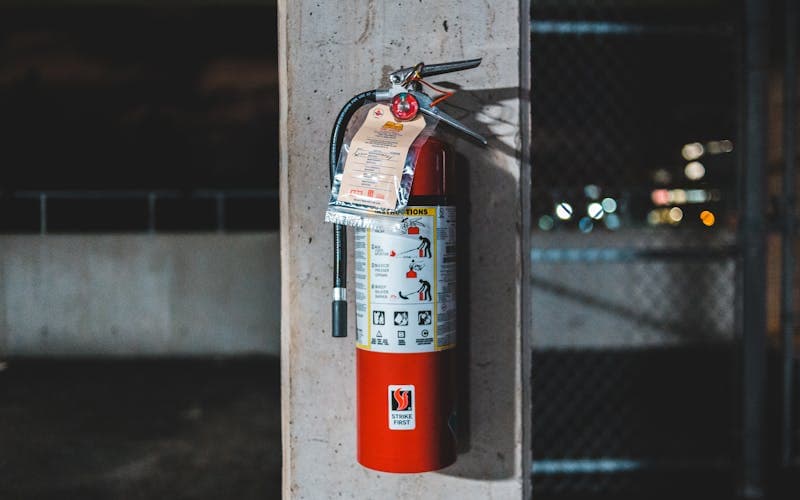
Fire Risk in Textile Factories and Dust Management: A Field Guide
Where fires start in textile factories, how to manage fibre and dust build-up, how to choose extinguishers, storage rules, and how to keep periodic inspection records ready for an audit.
 Yangın Takip Ekibi
In a textile plant, fire rarely starts with a major breakdown. It usually starts with a small build-up nobody noticed. Fibre collecting behind a carding machine, fine lint settling on top of a light fitting, or cotton dust around a hot bearing can grow into a serious fire from a single spark. That is why fire risk in a textile factory has to be read differently from other production sites: the fuel is not only in the warehouse, it is also in the air, on the ceiling and inside the machines.
Field teams and health and safety managers know this picture well. On inspection day everything looks clean, but look inside the ducts, on the cable trays and around the machine frames in the middle of a shift and you see something else. Even with every extinguisher in place, if dust build-up is not under control, a fire can spread faster than the equipment can respond.
This article walks through where fires start in textile facilities, how to manage fibre and dust, how to choose extinguishing equipment, and how to record periodic inspections so that they are ready for an audit.
Why is fire risk in a textile factory so high?
Most of the raw materials processed in textile production are combustible. Cotton, wool, linen and synthetic fibres create a fire load both while they are processed and while they are stored. Natural fibres such as cotton have a large surface area; loose fibre is in easy contact with air, so it ignites easily and flame travels quickly across its surface. Synthetic fibres can melt and drip, carrying the fire down to lower layers.
The second factor is the production process itself. Blending, carding, spinning, weaving and finishing all involve plenty of friction, heat and moving parts. A bearing that runs dry, a slipping belt or a stray piece of metal entering a machine can produce a spark or a hot spot. In finishing and drying, stenter frames and dryers run at high temperatures, and lint and oil vapour collecting there form a separate risk area.
The third factor is the layout of the building. Many textile plants operate in large production halls without internal division. That layout is efficient for workflow, but for fire and smoke it means an unobstructed path to spread. Keeping raw material, work-in-progress and finished stock close to the production floor also adds to the fire load. When these three factors combine, the risk assessment has to look at build-up, heat sources and spread paths together, not just at the number of extinguishers.
Fibre and dust build-up: the hidden fuel
The most underestimated issue in textile facilities is fine fibre that hangs in the air and settles on surfaces. A layer too thin to notice during the day turns into a thick coating within a few weeks on top of beams, light fittings, cable trays and inside ventilation ducts. When that layer ignites, the flame travels at a height that teams on the floor cannot see.
Another danger of dust build-up is secondary ignition after the initial fire. When a small flame or an air current lifts dust off a surface, the resulting dust cloud can ignite over a much wider area. Dust management is therefore not only a housekeeping matter but a direct fire prevention measure. In areas where dust can form an explosive atmosphere, the assessment duties under Türkiye's regulation on protecting workers from the hazards of explosive atmospheres also come into play, and that assessment should be carried out by a competent specialist.
Knowing where build-up is most common is the first step in a cleaning plan:
- The rear and lower sections of carding, blending and spinning machines
- The tops of beams, trusses and steel structures
- Light fittings and cable trays
- The inner surfaces of ventilation, extraction and filter ducts
- The inside of electrical panels and motor cooling fins
- The exhaust stacks of stenter frames and dryers
The cleaning frequency for each of these points should be set separately, based on production intensity and the fibre being processed. A single "weekly general clean" instruction usually does not reach the build-up at height or inside the ducts.
A practical cleaning plan for dust management
A good dust management plan defines in writing who cleans what, how often and with which method. First, divide the facility into areas and list the build-up points in each one. Then set a cleaning interval for each point: around machines at the end of every shift, light fittings and cable tray tops less often but regularly, and duct interiors during planned shutdowns.
The choice of method matters as much as the interval. Blowing dust off with compressed air does not remove it; it lifts it, moves it onto other surfaces and briefly creates a cloud that can ignite. Wherever possible, cleaning should be done by suction with an industrial vacuum of suitable specification. If work at height is involved, safety measures must be planned separately, and any nearby hot work should stop during cleaning.
Records are what keep the plan alive on the floor. Each cleaning round should note the date, the person who did it, the area covered and anything unusual found. A common mistake is accepting verbally that the cleaning was done without writing it down. In an audit or a post-incident review, work that was done but not recorded counts as work not done. Records also show which areas build up faster than expected, so the interval can be adjusted based on real data.
Controlling heat and spark sources
Managing the fuel is only half of it; ignition sources have to be limited too. The most common sources in textile plants are overheating bearings, slipping belts, metal fragments entering machines, loose electrical connections and high surface temperatures in drying areas. If any of these is not tied to a maintenance programme, it can start a fire the moment it meets accumulated dust.
From a fire perspective, preventive maintenance means catching the fault before it becomes a fire. This covers keeping to bearing lubrication intervals, checking belt tension and regularly checking the metal separators at the raw material intake. On the electrical side, keeping panel interiors clean, checking the tightness of connections and, where possible, scanning for hot spots with a thermal camera reveals problems that cannot be seen by eye.
Hot work requires its own discipline. If welding, grinding or cutting is to be done on the production floor, the surrounding dust should be cleaned before the job starts, combustible material moved away, a suitable extinguisher kept nearby and a fire watch left in place for a while after the work ends. Tying these steps to a hot work permit form keeps responsibility from becoming vague. A common mistake is skipping the permit procedure for short maintenance jobs, but a short job is no different from a long one in terms of risk.
Static electricity is another source that should not be ignored. In areas where synthetic fibres are processed and the air is dry, charge can build up as material flows. Measuring the earthing of machines and conductive ducts periodically, monitoring ambient humidity and checking that earthing connections are refitted after maintenance all reduce this risk. Maintenance teams leaving earthing cables disconnected after finishing a job is a common gap on site, and an easy one to miss.
Choosing and placing extinguishing equipment
Extinguisher selection in textile facilities should follow the fire class of each area. Fibre, fabric and yarn are solid combustibles and produce class A fires; around electrical panels and motors, extinguishers suitable for electrical equipment are needed. Chemicals and oils used in finishing and dyeing may call for an additional, area-specific assessment. So rather than distributing a single type of extinguisher across the whole site, the choice for each area should be based on a risk analysis.
The main placement criterion is that the extinguisher can be reached quickly when needed. Extinguishers should not be blocked by stock, pallets or bobbins, their signage should be visible from a distance and they should be positioned along escape routes so that they guide people. Türkiye's Regulation on the Fire Protection of Buildings provides the general framework for the number, placement and maintenance of extinguishers; for the specific application at your site, the current text of the regulation and the opinion of a qualified specialist should be the reference.
In large production halls, portable extinguishers alone may not be enough. Fire hose cabinets, automatic detection systems and, depending on the size of the facility, fixed extinguishing systems are assessed together. In dusty environments, smoke detectors producing false alarms is a common problem; in that case, instead of disabling the detector, review whether the detection type suits the area and how often it is maintained.
Storage and compartmentation rules
Raw material and finished goods stores are where the fire load in a textile facility is most concentrated. When bales, bobbins and fabric rolls are stacked tightly, fire spreads more easily and firefighting becomes harder. Stacking so that a clearance is left below sprinkler heads and lighting, keeping aisles open and not blocking fire hose cabinets are the basic rules.
Limiting stock waiting on the production floor also matters. Holding more material in production halls than a shift needs raises the fire load for no reason. Separating intermediate work-in-progress stores from the production area, keeping fire doors between stores and production in a condition where they can close, and keeping the space in front of those doors clear all limit the spread of fire from one area to another.
One common mistake is wedging fire doors open to make the workflow easier. That practice effectively cancels out the building's compartmentation. If a door has to stay open, consider a mechanism that closes it automatically when the alarm sounds, and test periodically that the mechanism works. The storage layout should also be checked on routine site walks, not only on inspection days. A short checklist makes these walks easier:
- Are the fronts of extinguishers and fire hose cabinets clear?
- Does the stack height leave enough clearance below sprinklers and light fittings?
- Are aisles and escape routes clear?
- Can fire doors close, and is the space in front of them clear?
- Is there more stock on the production floor than the shift needs?
Periodic inspections, drills and record keeping
Whether all these measures hold up in an audit or a real incident depends on regular inspection and records. Periodic inspections of extinguishers, maintenance of fire hose cabinets and detection systems, and tests of emergency lighting and fire doors should each be planned separately. For every device, the inventory should clearly show its location, type, last inspection date and next inspection date. For extinguisher inspections, the approach of relevant standards such as TS ISO 11602 provides the general framework.
Drills carry extra weight in textile facilities. Large production halls, noisy machinery and shift work are real obstacles to hearing the alarm and evacuating in an orderly way. Drills should be held on different shifts, the order for safely stopping machines should be rehearsed and a headcount should be practised at the assembly point. After every drill, the problems found should be written down and turned into actions with a named owner.
The most common record-keeping problem is fragmentation. When cleaning records sit in one folder, extinguisher tags on the devices, maintenance reports in email and drill reports in another file, gathering this information before an audit takes days. Keeping facility, device and inspection information in a single structure makes it possible to spot missed inspections in time and to present the requested document quickly during an audit.
Conclusion
Fire safety in a textile facility does not end with having the right number of extinguishers. Cleaning fibre and dust build-up regularly and with the right method, tying heat and spark sources to a maintenance programme, protecting storage layout and compartmentation, and recording all of this work form a whole that has to be handled together. The weakest link is usually not the work that is done, but the work that is skipped or never recorded and so goes unnoticed.
At Yangın Takip, we work so that fire safety companies can manage their customer accounts, facilities, inventory and periodic inspections in one place; in high-risk sites such as textile plants, that structure helps make sure the next inspection and the next drill are not missed.
Related reading
Bring extinguisher and maintenance tracking into one place
Request a short demo for your company and see the system with your own data in a 14-day free trial.
Request a free demoFrequently Asked Questions
Can textile factory dust be cleaned with compressed air?
It should be avoided wherever possible. Compressed air does not remove dust; it lifts it, moves it onto other surfaces and can briefly create a dust cloud that may ignite. Suction cleaning with an industrial vacuum of suitable specification is the safer method.
Which type of fire extinguisher is used in a textile plant?
The choice follows the fire class of each area. Solid combustibles such as fibre, yarn and fabric produce class A fires, while extinguishers suitable for electrical equipment are needed around electrical panels. Areas that use chemicals, such as dyeing and finishing, need a separate risk assessment.
How should a fire drill be planned in a textile factory?
Drills should be held on different shifts, and you should test whether the alarm can be heard in the noisy environment. Rehearse the order for safely stopping machines and the headcount at the assembly point. Turn the problems found into actions with a named owner and record them.
Where do fires most often start in textile factories?
In most cases the ignition source is an overheating bearing, a slipping belt, a metal fragment entering a machine or an electrical fault. When these sources meet fibre collected around machines and at height, a fire can grow quickly. Lint collecting in the exhausts of dryers and stenter frames is another risk area.