How to Set Up Emergency Response Teams: Team Size and Duties
A step-by-step guide to sizing fire-fighting, rescue, protection and first aid teams by hazard class, assigning duties for the moment of an incident, and keeping the teams current.
 Yangın Takip Ekibi
The emergency plan is ready, the floor plans are on the wall and the fire extinguishers have had their periodic inspections. Then, on inspection day, one of the first questions is: "Who is on your fire-fighting team, and when were they last trained?" In many workplaces the answer is a list drawn up years ago, half of whose members have since left the company. That is why the question of how to set up emergency response teams covers far more than writing a list of names.
Setting up a team means choosing the right people, sizing it according to the hazard class, defining each team's duties, providing training and equipment, and keeping all of this up to date. If any of these steps is missing, the team falls apart during a real incident and the gap is recorded as a finding at inspection.
In this article we walk through the legislation emergency teams are based on in Turkey, how many people they need, how to assign duties, and which records to keep so the teams stay alive over time.
Why Emergency Teams Are Set Up and Which Legislation Applies
In Turkey, the main legal basis for emergency teams is Occupational Health and Safety Law No. 6331 and the Regulation on Emergencies in Workplaces issued under it. The law requires the employer to assess emergencies in advance, take preventive and limiting measures, and appoint a sufficient number of trained and equipped people to deal with them. The regulation then sets out which teams these people form and how their numbers are calculated.
For fire specifically, another key text is the Regulation on the Fire Protection of Buildings. It also addresses the formation of fire-fighting teams in buildings and the training they must receive. In practice the two complement each other: one defines the employer's duty from an occupational safety perspective, the other defines the management's responsibility from a building fire safety perspective.
The purpose of the teams is to manage the critical period before the fire brigade, ambulance or other professional responders arrive. During that time the fire has to be kept from spreading, employees have to be evacuated safely, the injured need first response, and important documents and materials need protecting. Without a team, or with members who do not know their duties, those first minutes turn into a disorganised escape.
At inspection, simply having teams is not enough. Inspectors usually check:
- Whether the teams are written into the emergency plan
- Whether the team members still work at the site
- Whether training certificates and drill records exist
- Whether the teams' equipment is accessible and usable
Which Teams Are Needed? The Four Core Teams
The Regulation on Emergencies in Workplaces requires teams for fire-fighting, rescue, protection and first aid. In practice these are called the fire-fighting team, the rescue team, the protection team and the first aid team. In small workplaces one person can sit on more than one team, but care must be taken that their duties do not clash at the same moment.
Fire-fighting team
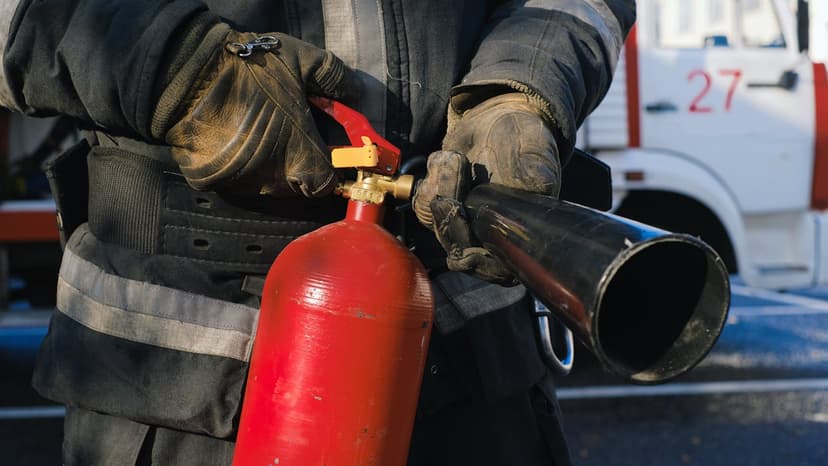
The fire-fighting team tries to bring a fire under control in its early stage using portable extinguishers, fire hose cabinets and any other fixed systems on site. Its members need to know the types of extinguisher, which extinguisher suits which class of fire, and when to decide to withdraw without putting themselves at risk.
Rescue team
The rescue team directs the evacuation, identifies people trapped in the building and makes sure a headcount is taken at the assembly point. It works with floor wardens and is the first group to check during an incident that escape routes are clear.
Protection team
The protection team moves important documents, records and valuable materials to a safe place, secures the scene and keeps unauthorised people out. The people who brief the fire brigade on the building and its hazardous points on arrival usually come from this team as well.
First aid team
The first aid team treats the injured until professional medical help arrives. Its members must hold a valid first aider certificate; putting an uncertified employee on the list does not mean the team has really been set up.
How Many People? Sizing by Hazard Class
The number of people on the teams depends on the workplace's hazard class and headcount. The Regulation on Emergencies in Workplaces sets the calculation as follows:
- Low-hazard workplaces: one support member for up to 30 employees, and one for every 30 employees above that
- Hazardous workplaces: one support member for up to 20 employees, and one for every 20 employees above that
- Very hazardous workplaces: one support member for up to 10 employees, and one for every 10 employees above that
This number applies separately to each of the fire-fighting, rescue, protection and first aid areas. A hazardous-class business with 60 employees does not meet its obligation by appointing three people in total; it must meet the number for each team. For the first aid team, the number of first aiders required by first aid legislation must also be taken into account.
A common mistake is to look only at the total headcount on the payroll. In shift-based operations, if a shift has no team members, then for a fire on the night shift the team effectively does not exist. Once you have the number, compare it with the shift roster:
- Is there at least one trained person from every team on every shift?
- Has a substitute been named for leave and sick-leave periods?
- In sites with several buildings or floors, are team members spread evenly across areas?
This check shows that the number is met on the floor, not just on paper.
How to Choose Team Members
In many workplaces team members are chosen by volunteering or by "whoever is free". Yet the right choice directly determines how the team performs during an incident. Start with employees who are physically on site all the time and whose place of work rarely changes. Field sales staff or managers who travel often may look good on the list but may not be there when it matters.
Next, match the duty to the person. People who can physically carry and operate an extinguisher and stay calm under pressure suit the fire-fighting team; people who know the building well and can direct a crowd suit the rescue team; people who know where records and valuable materials are kept suit the protection team. For the first aid team, the certificate requirement is decisive.
There are other points to consider when selecting members:
- The person's health is compatible with the team duty
- The team duty does not clash with the person's own responsibilities in an emergency
- The team leader works on the same shift and in the same area as the other members
- The person confirms acceptance of the duty with a signed appointment letter
Finally, notify team members of their appointment in writing. The appointment letter proves that the person knows their responsibility and is among the documents requested at inspection.
Assigning Duties: Who Does What, and When?
Once the teams exist, the most neglected issue is the order of duties during an incident. A general description such as "the fire-fighting team puts out the fire" does not tell anyone who raises the alarm, who cuts the power or who calls the fire brigade. Duties need to be written according to the timeline of the incident.
Start by defining the first detection and notification step. Everyone who notices a fire must know how to raise the alarm and whom to inform. Then write down each team's first move:
- The fire-fighting team tackles the incipient fire with the nearest suitable extinguisher and withdraws if it is growing
- The rescue team starts the evacuation, checks escape routes and takes a headcount at the assembly point
- The protection team moves designated documents and materials to a safe area and controls the building entrance
- The first aid team sets up a first aid point at the assembly area and assesses the injured
Beyond the teams, assign critical duties by name as well: the person who calls the fire brigade and ambulance, the person who shuts off electricity and gas valves, and the person who helps evacuate disabled or mobility-impaired employees. When these duties have no owner, everyone assumes someone else is doing them.
Finally, appoint a team leader and a deputy team leader for every team. The team leader coordinates the team's actions and reports in the post-incident review. The deputy takes on the same responsibility on shifts where the leader is absent.
Training and Equipment: What Makes a Team Truly Ready
The most concrete proof that a team exists is its training record. The legislation requires team members to be trained according to their subject. Fire-fighting training for the fire-fighting team and first aider training for the first aid team are the basic requirements. The rescue and protection teams need hands-on instruction in the evacuation procedure, assembly point management and their duty cards.
For training to work, classroom instruction alone is not enough. Fire-fighting team members should have held a real extinguisher at least once, pulled the pin and used it. In field experience, employees who have only seen extinguisher use on a slide often forget to pull the pin or aim the hose correctly during an incident.
On the equipment side, check the following:
- Are identifying and auxiliary items such as vests, helmets, torches and whistles stored in a known, accessible place?
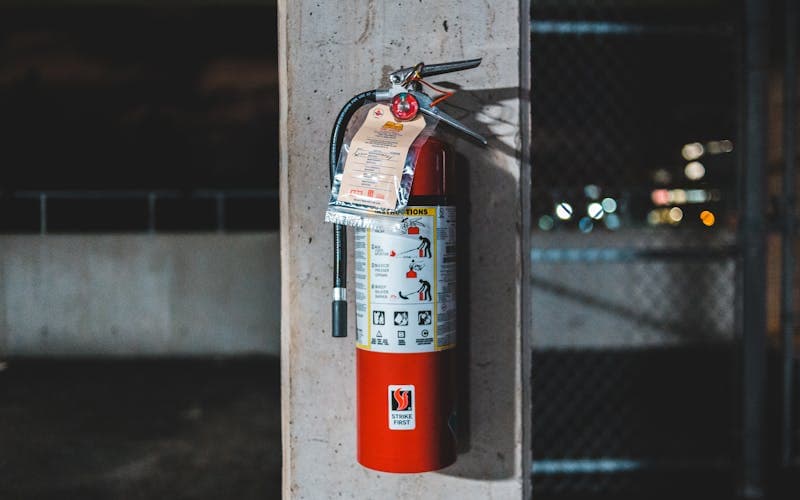
- Are the extinguishers' periodic inspections and recharge dates up to date?
- Is the first aid cabinet complete, with nothing past its expiry date?
- If radios or other communication devices are used, are they charged and working?
In most workplaces the link between team equipment and the inventory is broken. The extinguisher may have had its periodic inspection while the battery in the torch in the team store is dead. Listing team equipment in the same way as the device inventory, and keeping inspection dates in one place, makes the job easier.
Testing the Team with Drills
The only way to know whether teams really know their duties is a drill. The Regulation on Emergencies in Workplaces requires at least one drill a year in line with the emergency plan, with the results recorded. A drill tests the teams' behaviour, not the team list.
When planning a drill, first set the scenario: where the fire starts, which escape route is treated as blocked, how many people play the injured. Then appoint observers. Observers note how quickly the teams respond, whether the headcount is done correctly and whether there are gaps in the assignment of duties.
Always hold a review meeting after the drill. It should answer these questions:
- Did the alarm reach everyone, or was there a section that did not hear it?
- Did team members reach their posts, and was any team missing?
- Was the headcount at the assembly point accurate and quick?
- Was the equipment where it should be and usable?
Gaps that are found should be written into a corrective action list and tracked with an owner. If the drill report is just signed and filed, the same gaps will appear again at the next drill.
Keeping Teams Current and Maintaining Records
The hardest part of setting up a team is keeping it alive over time. Employees leave, change department or change shift; first aider certificates expire. If the list is not updated, within a few months a large part of the teams exists only on paper.
First, treat the team list as an integral part of the emergency plan. The emergency plan is renewed at set intervals depending on the hazard class, but the team list should not wait for that interval; it should be reviewed with every staff change. Adding the question "is this person a team member?" to onboarding and offboarding makes the check automatic.
Next, define which records to keep. For inspection readiness, the following documents are usually expected to be kept together:
- The current team list and each member's appointment letter
- Team members' training certificates and first aider certificates, with expiry dates
- Drill reports and corrective action records
- Periodic inspection records for team equipment and extinguishers
Finally, give these records a single owner. Information scattered between the safety specialist, the facility manager and human resources turns out incomplete and contradictory when someone tries to pull it together on inspection day.
Conclusion
Emergency teams work when they are set up with the right number of the right people and clear duties, and when they are backed by training, equipment and drills. Setting up a team is a one-off job, but keeping it current is a process repeated with every staff change, every training cycle and every drill.
At Yangın Takip we let facilities track their inventory, periodic inspections and field work in one place, so the inspection dates of team equipment and extinguishers do not get lost among the records needed for inspection readiness.
Related reading
Bring extinguisher and maintenance tracking into one place
Request a short demo for your company and see the system with your own data in a 14-day free trial.
Request a free demoFrequently Asked Questions
How many people should be on an emergency team?
The number depends on the hazard class and headcount. One support member is appointed for every 30 employees in low-hazard workplaces, every 20 in hazardous ones and every 10 in very hazardous ones, and the calculation applies separately to each team.
Can one employee be on more than one emergency team?
In small workplaces it is possible, but the duties must not clash during an incident. For example, the person tackling the fire cannot also take the headcount at the assembly point, so clashing duties should go to different people.
Do first aid team members need a certificate?
Yes, the first aid team must be made up of people holding a valid first aider certificate. The certificate must be renewed when it expires; an expired certificate can be treated as a gap at inspection.
How often should emergency drills be held?
At least one drill a year is required in line with the workplace emergency plan. Drill results should be reported, and gaps found should be tracked as corrective actions.