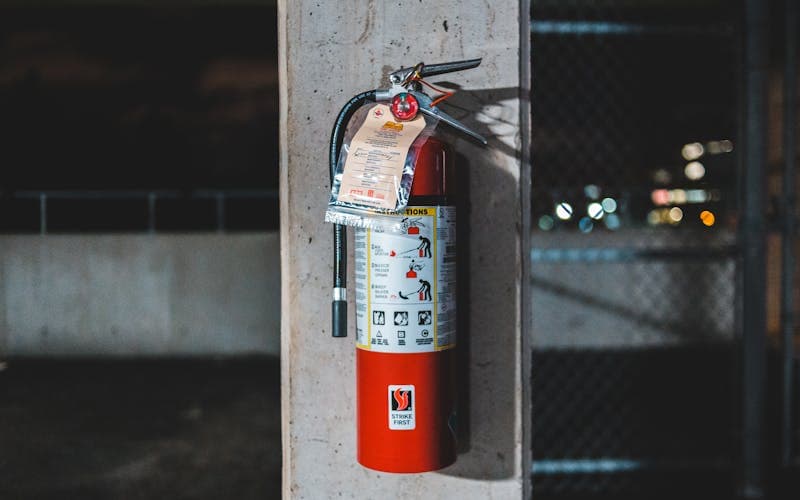
Fire Alarm Panel Fault Warning: What It Means and What to Do
What to do when the panel's yellow light comes on: how a fault differs from a fire alarm, the most common causes, the first response sequence, the service decision and why fault logs matter for inspections.
 Yangın Takip Ekibi
You arrive at the site in the morning and the fire alarm panel's yellow light is on, the unit is beeping intermittently and the display says "fault". The security guard has silenced the buzzer, but nobody knows what is actually wrong. In most facilities, a fire alarm panel fault warning is handled exactly like this: the sound is muted, the light stays on and the issue waits for days, sometimes weeks.
A fault warning, however, is a message telling you that part of the system can no longer do its job. If a circuit is broken, the detectors on that circuit will not detect a fire. If the battery is dead, the panel goes silent the moment mains power is lost. While the fault light is on, the building may look protected on paper, but in practice it is partly unprotected.
This article walks through how a fault warning differs from a fire alarm, the most common causes, the order of first response, when to call a service company and how to record the fault. The goal is simple: when a warning appears, nobody should be left wondering what to do.
Fire Alarm, Fault and Disabled: What Is the Panel Telling You?
Whether conventional or addressable, fire detection panels essentially report three different states. A fire alarm usually comes with a red light and a continuous sounder; a detector or manual call point has been triggered. A fault is indicated on most panels by a yellow light and an intermittent internal buzzer; part of the system is not working as expected. A disabled state shows that a zone, detector or output has been deliberately switched off.
Telling these three states apart is essential for a correct first response. A fire alarm calls for evacuation and verification. A fault calls for diagnosis: which zone, which device, which circuit. A disabled state needs as much attention as a fault, because a switched-off zone will not report a fire, and someone has to ask whether that was a conscious decision.
The panel's user manual explains the meaning of every light and display message. In many facilities the manual has been lost or forgotten in a cabinet in the panel room. A practical suggestion: post a short status card next to the panel, specific to that model. The card should include:
- The meaning of each light and each type of sound
- The location of the silence and reset buttons and the access level they require
- The zone list and the area each zone covers
- The responsible person and the service company to call in the event of a fault
This card allows a night-shift security guard to make the right decision. Remember, the panel tends to speak up most outside working hours.
Most Common Causes of a Fire Alarm Panel Fault Warning
A handful of recurring causes usually sit behind a fault warning. Knowing them helps you describe the situation more accurately before the technician arrives and avoids unnecessary panic.
Power-related faults are the most common group. When the mains supply is cut, the panel switches to battery and reports this as a fault. Batteries have a limited life; they lose capacity over time and the panel issues a "battery fault" or "battery low" warning. A tripped fuse, a failed charging circuit or a loose battery connection leads to the same result.
Circuit faults are the second large group. In conventional systems there is an end-of-line device at the end of each zone circuit, and the panel monitors the circuit continuously. A broken cable produces an open-circuit fault, while two conductors touching produce a short-circuit fault. In addressable systems, a loop break or a device that fails to communicate shows up as a fault. Cable damage during renovation work, moisture and rodents are frequent causes of this type of fault.
Device-related faults also play a significant role:
- A detector removed from its base, or taken down during ceiling work and never put back
- A dirty optical detector flagged by the panel as needing maintenance
- An open or short circuit on a sounder or beacon circuit
- An earth fault, meaning a conductor is in contact with earth
Finally, software or configuration errors can also produce fault messages. For example, if a device has been added to the system but not configured on the panel, or a configured address is missing from the field, the panel reports a mismatch. These situations typically appear after a recent change.
First Response Sequence When a Fault Warning Appears
When a fault warning appears, the aim is not to tinker with the system but to identify the situation correctly and pass it to the responsible person. Unauthorised changes on the panel can create a new fault instead of clearing the existing one. That is why the first response sequence should be a clear procedure everyone knows.
First, read the panel display or zone lights and note the fault message exactly as shown. Record which zone, which address and which fault type is displayed, together with the time. If possible, take a photo of the display. For the service technician, this information is far more useful than "the panel is beeping" over the phone.
Next, silence the internal buzzer, but do not press the reset button at random. Silencing stops the sound while keeping the fault record and light status intact. A reset may clear a transient fault from the display and cost the technician a valuable clue. If the fault is persistent, it will come back anyway.
Then physically check the area covered by the fault. Simple causes you may be able to see include:
- A detector removed from the ceiling or knocked out of place
- Ongoing renovation, painting or ceiling work in the zone
- The state of the mains fuse in the panel room
- Moisture, a water leak or a point where a cable has been damaged
Finally, take interim measures on the assumption that fire detection is not working in the faulty zone. This could mean an additional fire watch in the area, more frequent patrol rounds, or suspending hot work permits if hot work is under way. Until the fault is cleared, that area should be treated as unprotected.
Deciding to Call Service: Your Own Team or an Authorised Company?
Not every fault warning requires a service call, but every fault must be resolved. The cause of the fault and the competence of the facility team determine the decision. A wrong decision leads either to unnecessary cost or, more dangerously, to a zone left unprotected for a long time.
Situations the facility team can handle are usually visible and simple. Refitting a detector that was removed during renovation and never put back, resetting a tripped fuse, or confirming the panel status once mains power is restored after an outage fall into this group. If the panel returns to normal after these steps, the event is recorded and reported to the service company at the next periodic maintenance visit.
Situations that call for an authorised company are more technical:
- An open-circuit or short-circuit fault whose source cannot be found
- An earth fault warning
- A battery fault, or a battery that is due for replacement
- A sounder or beacon circuit fault
- Panel software, configuration or address mismatch messages
- Faults that recur within a short time or return immediately after a reset
When calling for service, share the fault record, the photo of the display and information about any work carried out before the fault. This lets the technician arrive with the right parts and improves the chance of clearing the fault on the first visit. The same holds for fire safety service companies: the clearer the information collected from the customer during a fault call, the more efficient the field planning.
Common Mistakes and Why They Are Dangerous
Most mistakes around fault warnings come not from bad intent but from treating the warning lightly because "it is not a fire anyway". Yet these mistakes can prevent the system from doing its job in a real fire.
The most common mistake is disabling a zone permanently. A zone that keeps reporting faults or false alarms is disabled to stop the noise and then forgotten. A fire in that zone will then never reach the panel. Disabling should only ever be a temporary measure, recorded with when and by whom it was done, and reversed as soon as possible.
The second common mistake is physically cutting off the panel's internal buzzer or disconnecting the battery. A panel with its buzzer cut off reports every later fault silently; a panel with its battery disconnected shuts down completely at the first power cut. Both interventions leave the system looking operational while it is in fact blind.
Other frequent mistakes include:
- Passing a fault on verbally without recording it
- Letting renovation crews remove detectors without checking whether they were refitted
- Resetting recurring faults each time without investigating the root cause
- Sharing the panel password and access levels with everyone
What these mistakes have in common is that ownership of the fault remains unclear. If it is not clearly known who holds a fault warning, when it was opened and when it was closed, that fault will most likely be forgotten.
Fault Logging and Follow-Up: Being Ready for Inspection
Fire detection systems are systems that require regular maintenance and inspection under the regulations on fire protection of buildings. Inspections may look not only at whether the system works on the day, but also at how past faults were handled. Keeping a fault log is therefore necessary both for safety and for inspection readiness.
A good fault log allows the event to be traced from start to finish. At a minimum, the log should contain:
- The date and time the fault was detected
- The message shown on the panel, with zone and address details
- The person who detected and reported the fault
- The interim measures taken
- The date and company of the service call, if one was made
- The date the fault was cleared, the work done and any parts replaced
Recording the log in an accessible system rather than only a paper logbook makes a big difference to follow-up. A paper logbook stays in the panel room, the people concerned do not see it and open faults slip through the cracks. In a digital record, open faults can be listed, those exceeding a certain time can be spotted and the history can be reviewed per facility.
Logs become more meaningful when reviewed alongside periodic inspection reports. Faults that recur frequently in the same zone can signal a structural problem requiring circuit renewal or device replacement. Such patterns only become visible when records are kept consistently, and they can then be reflected in the maintenance plan.
Reducing Faults Through Periodic Inspection and Preventive Maintenance
Some fault warnings cannot be prevented; cable damage or an unexpected electrical problem can always happen. A significant share, however, is either spotted in advance or avoided altogether through regular periodic inspection and preventive maintenance. Replacing batteries on time, having dirty detectors cleaned and testing circuits regularly all fall into this category.
A periodic inspection typically checks all panel functions, battery and charging status, the operation of detectors and manual call points, sounder and beacon outputs, and the circuit monitoring function. The TS EN 54 series of standards defines requirements for fire detection products and system components; the scope and frequency of maintenance are set according to the manufacturer's recommendations and the facility's risk profile. The company performing the inspection should report its findings and the work done on every visit.
When planning preventive maintenance, pay attention to the following:
- Record battery installation dates and plan replacements in advance
- Have detectors in dusty, humid or special environments such as kitchens checked more often
- Confirm the status of the fire detection system before and after renovation work
- Track whether deficiencies noted in maintenance reports have been closed
Fire drills are also part of this cycle. During a drill you can observe whether the alarm is heard throughout the building, whether the beacons work and whether staff read the panel messages correctly. These observations show whether the fault procedure actually works in real life.
Conclusion
A fault warning on a fire alarm panel may not look as urgent as a fire alarm, but it shows that part of the system cannot do its job. The right approach is to read the message, record it, take interim measures and have the fault cleared permanently by the responsible person or an authorised company. Silencing the buzzer and waiting, disabling a zone and forgetting it, or disconnecting the battery leaves the building quietly unprotected.
At Yangın Takip, we work so that fire safety companies can follow their customer accounts, per-facility device inventory, periodic inspections and fault records in one place, with the aim that no open fault is ever overlooked.
Related reading
Bring extinguisher and maintenance tracking into one place
Request a short demo for your company and see the system with your own data in a 14-day free trial.
Request a free demoFrequently Asked Questions
Why does a fire alarm panel beep intermittently?
On most panels, an intermittent internal beep signals a fault or warning condition, not a fire alarm. The message on the display or zone lights shows which zone is affected and what type of fault it is. After silencing the buzzer, note the message and pass it to the responsible person.
What happens if a fire alarm panel shows a battery fault?
A battery fault means the panel may not be able to run on standby power when mains power is lost. The system keeps working while mains is present, but the panel may shut down during an outage. An authorised service company should be called to replace the battery.
Can a faulty zone be disabled?
Only as a temporary measure and only if it is recorded. A disabled zone will not report a fire to the panel, so additional watch must be kept in that area. The zone should be re-enabled as soon as the fault is cleared.
Does resetting a fire alarm panel clear the fault?
A transient fault may disappear from the display after a reset, but a persistent fault will soon come back. Resetting at random can also erase the fault information the technician needs. Record the message first, then act on the responsible person's instructions.