Fire Extinguisher Types: Which Extinguisher for Which Environment?
Comparison of ABC dry chemical, CO₂, foam, water-based, and clean agent extinguishers. Choosing the right extinguisher saves lives.
 Yangın Takip Ekibi
Understanding Fire Classes
To choose the right extinguisher, you first need to understand fire classes:
- Class A: Solid material fires (wood, paper, textiles)
- Class B: Liquid fires (gasoline, oil, paint)
- Class C: Gas fires (LPG, natural gas, propane)
- Class D: Metal fires (magnesium, aluminum powder)
- Class E/F: Electrical and cooking oil fires
Detailed Extinguisher Type Comparison
1. Dry Chemical Powder (ABC)
The most common type. Suitable for general-purpose use.
- Suitable for: Class A, B, C fires
- Advantages: Wide application, economical, 5-year refill cycle
- Disadvantages: Leaves powder residue, can damage electronics
- Ideal environment: Offices, warehouses, general areas
2. CO₂ (Carbon Dioxide)
Clean suppression — leaves no residue.
- Suitable for: Class B and electrical fires
- Advantages: No residue, electronics-safe, fast-acting
- Disadvantages: Ineffective outdoors, insufficient for Class A, cold burn risk
- Ideal environment: Server rooms, laboratories, electrical panels
3. Foam (AFFF)
Specialist for liquid fires.
- Suitable for: Class A and B fires
- Advantages: Surface coverage effect, prevents re-ignition
- Disadvantages: Cannot be used on electrical fires, 3-year refill cycle
- Ideal environment: Fuel storage, garages, kitchens
4. Water-Based
Eco-friendly alternative.
- Suitable for: Class A fires
- Advantages: Environmentally friendly, high cooling effect
- Disadvantages: Dangerous for electrical and oil fires, freezing risk
- Ideal environment: Wooden structures, paper storage
5. Clean Agent (FM-200, Novec)
Premium protection — for sensitive equipment.
- Suitable for: Class A, B, C and electrical fires
- Advantages: Zero residue, ozone-friendly, rapid suppression
- Disadvantages: High cost, requires enclosed space
- Ideal environment: Data centers, museums, archives
Selection Guide
| Environment | Recommended Type | Capacity |
|---|---|---|
| Office | ABC Dry Chemical | 6 kg |
| Server room | CO₂ or Clean Agent | 5 kg |
| Kitchen | Foam or Class F | 6 L |
| Warehouse | ABC Dry Chemical | 12 kg |
| Parking garage | Foam | 9 L |
| Electrical room | CO₂ | 5 kg |
Proper Placement & Quantity
- Minimum 1 extinguisher per 500 m²
- Maximum distance to reach an extinguisher: 25 meters
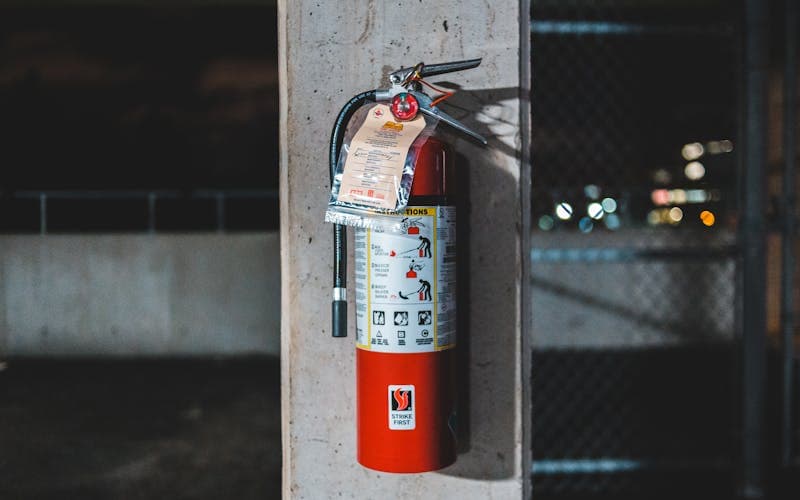
- Mounting height: 90-120 cm from floor
- Must be placed in visible, marked locations
Inventory Management
To digitally track different types of extinguishers, manage refill schedules, and handle maintenance differences, use the Yangın Takip platform. Each extinguisher's type, capacity, and maintenance history is tracked from a single screen.
Bring extinguisher and maintenance tracking into one place
Request a short demo for your company and see the system with your own data in a 14-day free trial.
Request a free demo