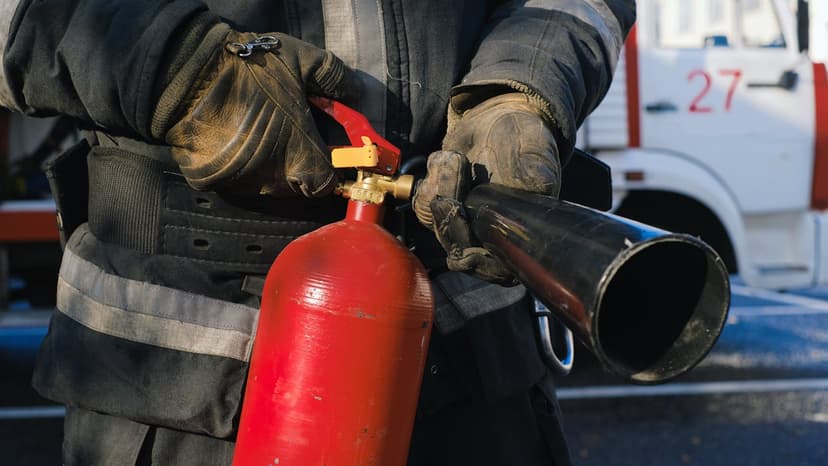
Fuel Station Fire Safety: Risks, Equipment, Tanker Unloading and Record Keeping
A practical fire safety guide for fuel stations, from risk zones and extinguisher placement to tanker unloading, drills and inspection-ready records.
 Yangın Takip Ekibi
Fire safety at a fuel station is a topic many sites only remember when an inspection is announced. The labels on the extinguishers at the pump islands have faded, nobody recalls when the unit inside the shop was last checked, and what should be kept around the fill points of the underground tanks is explained differently from one shift to the next. The problem is rarely a lack of equipment; it is that nobody is clearly responsible for it and nobody knows when it was last inspected.
What sets a station apart from other businesses is that the source of risk is constantly moving. Vehicles come and go all day, tankers unload, customers refuel with engines running, and a shop and a car wash operate on the same plot. Vapour, hot surfaces and static electricity can come together at the same moment. That calls for a discipline repeated every day, not a one-off installation.
In this article we cover what the station manager, and the fire safety company serving the station, should look at on site: risk zones, extinguisher placement, tanker unloading, periodic inspections, staff training, drills and record keeping that is ready for an inspection.
Where fire risk comes from at a fuel station
Reducing a station's risk to a single point is misleading. The real danger lies in the moments when fuel vapour meets an ignition source. Petrol vapour is heavier than air; it collects near the ground and drifts towards drains, channel openings and low points. So the hazardous zone is not just the pump itself but the area around the pump island, the tank fill points, the vent pipe outlets and the oil-water separators.
Ignition sources are hidden in everyday operations. An engine left running, a mobile phone used while refuelling, a cigarette, a worn electrical cable, a hand tool that throws sparks, or the static charge carried by a customer getting in and out of a vehicle are just some of them. Failing to earth the hose connection during tanker unloading also raises the risk of a static discharge.
Splitting the station into zones makes mapping the risk easier:
- Pump islands: refuelling, vehicle traffic and customer behaviour
- Tank area and fill points: tanker unloading, vapour release, leaks
- Shop and storeroom: flammable stock, electrical panels, heating equipment
- Car wash and lubrication bay: chemicals, oily waste, electrical devices
- LPG autogas unit (if any): pressurised gas, separate distance and equipment requirements
Writing down, for each zone, which ignition source is likely and which means of extinguishing is ready to hand is the foundation of every step that follows. In most businesses this work is done as part of the risk assessment and the explosion protection document; what matters is not that the document sits on a shelf but that it matches the layout on site.
Choosing and placing fire extinguishers
At a station, where an extinguisher stands matters as much as how many there are. When a fire starts at a pump island, staff need to reach an extinguisher within a few steps. An extinguisher that ends up inside the shop, in a locked cabinet or behind a pallet exists on paper but cannot be used in practice.
Fuel fires fall into the liquid fire class. That is why dry chemical powder extinguishers suited to liquid fires are widely chosen for pump islands and the tank area. Keeping a larger wheeled extinguisher in the tank area and at the tanker unloading point is common practice at many sites. For electrical panels, a non-conductive agent that does not damage the panel is chosen. The exact type and capacity are set by the size of the site, the risk assessment and the regulations in force; the general principle here is that every risk should have its own extinguisher close by.
When checking the layout, look for answers to these questions:
- Can an extinguisher be reached without obstruction from every pump island?
- Is the extinguisher protected from vehicle impact without blocking access to it?
- Is there an extinguisher near the tank fill point, kept ready during unloading?
- Is there an extinguisher suited to the type of risk in the shop, storeroom and electrical room?
- Are extinguisher locations marked and visible at night?
A common mistake is hiding extinguishers in corners so customers do not see them. The concern for appearance is understandable, but staff losing time searching for an extinguisher during a fire is unacceptable. Another mistake is leaving extinguishers exposed to the weather. Sun, rain and dust make the label hard to read and the pressure gauge hard to see. A protective cabinet for outdoor units both extends their life and makes periodic inspection easier.
Fuel station fire safety during tanker unloading
One of the riskiest routine jobs at a station is unloading fuel from a tanker into an underground tank. A large amount of fuel and vapour moves in a short time, the fill points are open and the tanker waits on site. Tying this operation to a procedure has a clear effect on the station's overall safety level.
To unload safely, write the sequence down and apply it the same way every time. First make sure the tanker has parked at the right spot, the engine is off and the handbrake is on. Next connect the tanker's earthing; earthing must be in place before the hose is connected and must not be removed until unloading is complete. Cordon off the unloading area with tape or cones and stop vehicles entering that zone for the duration. Place the wheeled extinguisher near the unloading point, on the upwind side. Finally, make sure a member of staff stays at the point throughout; leaving the tanker driver alone is a frequent lapse.
The job is not over when unloading ends:
- Hoses are drained and connections are closed.
- Fill point caps are locked.
- Any drips or leaks are cleaned up with absorbent material.
- Earthing is removed last.
- The time, quantity and responsible staff member are recorded.
This record is valuable not only for stock control but also for showing what was done and how if an incident occurs. Having the procedure posted on the shift board and explained to new staff on their first day is what being written down really means.
Periodic inspection and maintenance schedule
However well equipment is chosen, it loses reliability if it is not checked regularly. At stations the inspection schedule is usually built in two layers: short visual checks done by staff and periodic maintenance done by an authorised company.
A visual check takes a few seconds per extinguisher, but done regularly it catches many problems early. In this check, staff look at the following:
- Is the extinguisher in place with nothing in front of it?
- Is the pressure gauge needle in the green zone?
- Are the seal and pin intact?
- Is there any dent, rust or damage on the body?
- Is the label legible and the last inspection date visible?
Periodic maintenance is the job of an authorised service provider. The general framework for maintaining and recharging extinguishers is set by the TS ISO 11602 standard; the interval depends on the extinguisher type and conditions of use. At the end of this maintenance, the work done, the date and the company are recorded on the extinguisher's label. Periodic inspections by an authorised company should likewise be scheduled for the fire detection and alarm system, emergency lighting and any fixed extinguishing systems.
The most common problem on site is that inspections are done but recorded in scattered places. The label on an extinguisher may show one date, the service report another and the station's logbook a third. This inconsistency costs credibility during an inspection. Giving every extinguisher a fixed inventory number, linking inspections to that number and seeing the next inspection date in advance is how you entrust the schedule to a system rather than to individuals.
Staff training and shift responsibilities
Staff turnover at stations is high, and shift work makes it hard to pass knowledge from one person to the next. The goal should therefore be a minimum level of competence on every shift, not fire safety knowledge that stays with a few people.
Every shift should have at least one person who knows how to use an extinguisher, where the emergency stop buttons are and what they do, where the main electrical switch is, how to call the fire brigade and how to move customers away. Emergency stop buttons cut power to the pumps; pressing them is among the first actions in a fire or a large spill. But if staff do not know where the button is, or a display stand has been placed in front of it, the safeguard is useless.
When planning training, we suggest this approach:
- Every new staff member learns the station's emergency plan and equipment locations before going on duty.
- Extinguisher use is demonstrated hands-on; explaining it is not enough.
- At shift handover, any open fault or missing equipment is handed over in writing.
- The date, attendees and subject of each training session are recorded.
A common mistake in this process is getting training out of the way with one group presentation a year. At a station with frequent staff changes, untrained people may be on shift for most of the year. Short but frequently repeated sessions close this gap better.
Drills: choosing a scenario and keeping records
A drill is the only way to see the gap between the plan and reality. A drill at a station is different from an evacuation drill in an office building, because there are customers, vehicles and a tanker on site, and the scenario must reflect that.
When choosing a scenario, start from the station's real risks. A vehicle fire at a pump island, a leak during tanker unloading or a fire in the shop storeroom are situations that can genuinely happen on site. Each scenario should test how the person who first notices the incident raises the alarm, how long the emergency stop takes, how customers and vehicles are moved off the site, who reaches the extinguisher and how quickly, and when the fire brigade is called.
The value of a drill lies in the review afterwards. Once it is over, hold a short meeting to answer these questions:
- Which step took longer than expected?
- Which equipment was hard to reach?
- Who did not know their role?
- Does the plan match the actual layout on site?
The answers should be written into the drill report, and each gap found should be given an owner and a date. Signing the report and filing it without following up on the gaps turns the drill into a formality. During an inspection, the question may be not only whether the drill was held but whether its findings were closed.
Record keeping ready for inspection
Stations may be inspected by different authorities, and the document set requested in each inspection follows similar logic: you must be able to show that the equipment exists, that it was maintained, that staff were trained and that the emergency plan is applied. If these documents are scattered, the inspection becomes difficult even when the work was done correctly.
For inspection-ready records, keep at least the following together:
- Extinguisher inventory: location, type, capacity and inventory number
- Last maintenance date and next inspection date for each extinguisher
- Maintenance and inspection reports from the authorised company
- Inspection records for fire detection, alarm and emergency lighting systems
- Staff training records
- Drill reports and the follow-up status of findings
- The current version of the risk assessment and emergency plan
The real test of these records is the moment an inspector stands in front of an extinguisher and asks, "When was this last serviced?" If the answer comes in a few seconds, the record system works. If you have to search through folders, the information exists but is not accessible. The link between the inventory number on the label and the digital record is what makes that question answerable instantly.
The same applies to companies providing fire safety services. Imagine a company serving dozens of stations; each station's extinguisher inventory, maintenance dates and report history must be tracked separately. When that tracking is left to personal memory or scattered spreadsheets, missing a station's maintenance date becomes inevitable.
Conclusion
Fire safety at fuel stations is not finished by installing the right equipment once. Correctly defined risk zones, accessible extinguisher placement, a procedure for tanker unloading, periodic inspections that are never skipped, trained staff on every shift and closed drill findings all work together. When one of these links weakens, the others lose their reliability too.
At Yangın Takip, we work so that fire safety companies can follow their customer accounts, sites and equipment inventory, periodic inspection schedules and field work in one place; at busy sites like stations, this is what keeps the next maintenance from being missed.
Related reading
- Otellerde Yangın Güvenliği: Gereklilikler ve Denetim Hazırlığı — https://yangintakip.com/en/blog/otelde-yangin-guvenligi-gereklilikleri-denetim-hazirligi
- AVM'lerde Yangın Güvenliği Yönetimi Nasıl Kurgulanır? — https://yangintakip.com/en/blog/avm-yangin-guvenligi-yonetimi-nasil-kurgulanir
- Fire Safety Tracking Software — https://yangintakip.com/en/cozumler/yangin-guvenligi-takip-programi
Bring extinguisher and maintenance tracking into one place
Request a short demo for your company and see the system with your own data in a 14-day free trial.
Request a free demoFrequently Asked Questions
Which fire extinguisher is used at a fuel station?
Dry chemical powder extinguishers suited to liquid fires are widely chosen for pump islands and the tank area. Many sites keep a larger wheeled extinguisher in the tank area and at the unloading point. Electrical panels need a non-conductive agent that does not damage the panel; the exact type and capacity are set by the risk assessment.
When is earthing connected during tanker unloading?
Earthing is connected before the hose and is not removed until unloading is complete and the hoses are disconnected. This sequence lets static charge built up during unloading discharge safely. Removing the earthing last is an essential part of the procedure.
Why is using a mobile phone banned at petrol stations?
During refuelling there is fuel vapour around the pump, and any possible ignition source is a risk. That is why stations restrict phone use, smoking and running engines at the pump. Staff reminding customers of these rules politely but consistently is part of everyday safety.
How is a fire drill carried out at a fuel station?
A scenario based on the station's real risks is chosen, such as a vehicle fire at a pump island or a leak during unloading. The alarm, emergency stop, moving customers away, reaching the extinguisher and calling the fire brigade are tested in turn. The findings are then written into a report, and each gap is given an owner and a date.