Fire Safety Responsibilities of Site Management: A Checklist
What residential site and apartment managements need to own in fire safety, covering equipment inventory, maintenance schedule, escape routes, drills and record keeping.
 Yangın Takip Ekibi
In many residential complexes, fire safety is a job nobody fully owns. The management assumes the maintenance contractor is tracking everything; the contractor waits for the management to call; and the flat owners never look at the label on a fire extinguisher for years. This is exactly where the fire safety responsibilities of a site management matter: when responsibility is not held in one place, the gaps show up at the first serious inspection or, in the worst case, during a real fire.
The problem usually comes from ambiguity rather than bad intent. The manager changes, the previous term's maintenance records stay in a folder somewhere, and the new management has no idea which extinguisher is due for refilling and when. If car park ventilation, fire hose reels, emergency lighting and the detection system are each entrusted to a different company, the picture becomes even more fragmented.
In this article we look at what residential site and apartment managements need to own in fire safety, which tasks can be handed to a service company and which cannot, under concrete headings. The goal is to help the management board or the professional manager build a sustainable routine that is ready both for an inspection and for a possible incident.
What do the fire safety responsibilities of a site management cover?
Turkey's fire regulations, in particular the Regulation on the Fire Protection of Buildings, link the upkeep of fire safety measures in existing buildings to building owners and managers. In residential complexes under condominium ownership, this in practice means the management board or the manager is responsible for keeping the fire equipment in common areas in working order. The details depend on the building's height, its use and the systems installed, so every site should clarify its own situation with an expert.
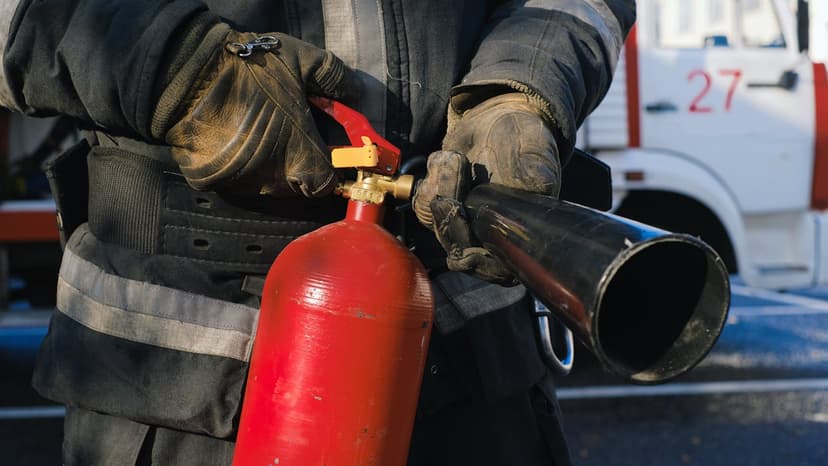
It helps to think about the scope in three layers. The first layer is equipment: fire extinguishers, fire hose reels, hydrants, sprinkler and detection systems, emergency lighting, smoke extraction and pressurisation systems. The second layer is escape routes: stairways, fire doors, corridors and the assembly point. The third layer is people and organisation: assignments, training, drills and record keeping.
- Arranging periodic inspection and maintenance of common-area equipment
- Keeping escape routes clear, signed and usable
- Keeping fire doors self-closing and unlocked
- Retaining maintenance, inspection and drill records
- Informing residents and site staff
The inside of each individual unit is, as a rule, the owner's area. However, hazardous use in one flat, such as piling belongings in the escape stairway, affects the whole building, so the management has a duty to warn and intervene. Writing this boundary clearly into the management plan and into announcements to residents reduces disputes later on.
Equipment inventory: first know what you have
The first step of responsibility is knowing which fire equipment is where on the site. Surprisingly, many managements do not have this list. Devices move over the years, some go missing, and those added with new blocks never make it into the records. Without an inventory, it is impossible to prove that periodic inspections were carried out in full.
A good inventory records, for each device, its type, capacity, location, serial number, refill or manufacturing date and last inspection date. The location should not be general like "Block B" but specific enough to find on site, such as "Block B, 3rd floor, in front of the lift". Fixed systems such as fire hose reels, hydrants and control panels should also be listed as separate items.
When building the inventory, the following order works well in practice:
- First, ask the current maintenance company for its latest service report and device list
- Then walk every block and floor and compare the list with what is actually on site
- Note missing, extra or relocated devices and update the list
- Finally, give every device a readable label and, if possible, a unique code
An inventory is not a document you prepare once and forget. It needs updating at every maintenance visit, every device replacement and every renovation. Otherwise, within a few years it drifts away from the reality on site again.
How do you manage the periodic inspection and maintenance schedule?
In Turkey, the TS ISO 11602 series is the reference for periodic inspection and maintenance of fire extinguishers. Depending on the device type, there are different tasks such as visual checks, annual maintenance, and longer-interval refilling and pressure testing. Fire hose reels, sprinklers, detection and emergency lighting systems each have their own maintenance requirements as well. The exact intervals should be clarified with the authorised company, together with the manufacturer's instructions and the relevant standard.
The management's main duty here is not to carry out the maintenance itself but to make sure the schedule is never missed. The most common problem is maintenance being done one year and forgotten the next. This risk rises noticeably when the manager or the maintenance company changes. The schedule should be tied to a recorded system, not to one person's memory.
A practical schedule should include the following:
- The next inspection date for each equipment group
- The company and the responsible person who will carry out the inspection
- A reminder sent before the due date
- Confirmation of the report and label update after the inspection
A member of the site staff can be assigned to monthly visual checks. These checks look at whether the device is in place, whether the pressure gauge needle sits in the green zone, whether the seal and pin are intact, and whether access to the device is blocked. Simple as they seem, these checks are the cheapest way to catch problems that appear between annual maintenance visits.
Escape routes and fire doors: the most neglected area
The most frequent shortfall found in inspections and real incidents is not in the equipment but in the escape routes. Bicycles, prams and parcel boxes left on stair landings, or fire doors wedged open, let smoke spread across a whole floor in a short time and make evacuation harder.
The job of a fire door is to hold smoke and flame in one compartment for a certain period. It can only do that when it is closed. A fire door whose closer has been removed, that is locked, or that is kept permanently open is effectively useless. Doors connecting to car parks and storage areas need particular attention in this respect.
Concrete steps the management can take in this area include:
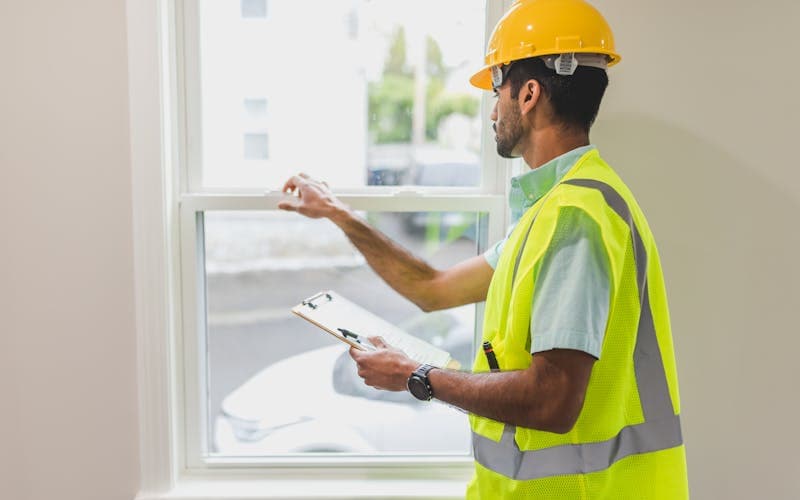
- Walking the escape stairways and corridors at regular intervals and recording the findings
- Sending written warnings to flats that leave belongings and acting on a board decision if it happens again
- Having door closers and panic bars checked to confirm they work
- Having exit signs and emergency lighting tested to confirm they work during a power cut
A common mistake is to carry out these checks only when someone complains. An escape route problem bothers nobody until the moment of a fire, so a regular, recorded walk-through is the most effective measure.
Assignments, training and drills
However well kept the equipment and escape routes are, the system is incomplete without people who know what to do in a fire. Site staff, security guards and the technical team should know in advance who calls the fire brigade, who alerts the blocks, and who helps disabled or elderly residents when a fire is detected.
Depending on the size and use of the building, the regulations call for teams to be formed for tasks such as firefighting, rescue and first aid. In residential sites these teams are usually made up of site staff and volunteer residents. What matters is that the names are on an up-to-date list and that these people have received basic fire training.
A drill is the only way to see whether the plan actually works. A well-planned drill reveals:
- Whether the alarm is heard in every block
- Whether everyone knows the assembly point
- How long the evacuation takes and where it gets stuck
- Whether team members remember their roles
After the drill, hold a short review and put the findings in writing. The drill report is useful both for improving the next drill and as evidence during an inspection that the management has fulfilled its duty.
Record keeping and inspection readiness
During an inspection or a post-incident investigation, the first thing asked for is usually the paperwork. A device that was maintained but whose report cannot be found is, in practice, no different from one that was never maintained. That is why record keeping is an inseparable part of fire safety responsibility.
The core documents to keep are: the equipment inventory, maintenance and inspection reports, the service company's authorisation documents, drill reports, training attendance lists, assignment lists and warning letters sent to residents. These documents should be dated, signed and traceable to the relevant equipment.
Keeping the documents in a single folder is already a big step forward, but a digital, searchable record is much safer. When the manager changes, handing the records over in full to the new management keeps responsibility continuous. At handover, it is useful to list the inventory, open maintenance jobs and upcoming inspection dates separately.
Running an internal check at least once a year is a good habit for inspection readiness. In this check the inventory is compared with the site, overdue inspections are identified, escape routes are walked and missing documents are completed. A routine like this takes the surprise out of inspections.
Sharing responsibility with the service company
Site managements usually have the maintenance of fire equipment carried out by an authorised company. That is the right choice, but outsourcing maintenance does not remove the management's responsibility. The management remains obliged to follow up that the work is done on time and in full.
For a healthy working relationship, the scope of the contract should be written clearly. The contract should state which equipment is covered, the visit frequency, the format and delivery time of the report, the response time for faults, and how replaced parts are approved. Every item left vague turns into a "that wasn't our job" argument later.
Points to watch when choosing and working with a company:
- Confirm that the company holds the relevant authorisation documents
- Ask for a device-level report after every visit
- Compare the device list in the report with your own inventory
- Get a written commitment on when identified deficiencies will be fixed
A common mistake is filing the report without reading it. A device marked "non-compliant" in the report, or a part recommended for replacement, is a job waiting for approval. When that approval is not given, the problem stays on site until the next maintenance visit.
Conclusion
A site management's fire safety responsibility is met not with a one-off investment but with a continuous follow-up routine. When an equipment inventory, a periodic inspection schedule, clear escape routes, a trained team and complete records come together, you are ready both for an inspection and for a possible incident.
The hardest part of building this routine is taking the work out of one person's memory and tying it to a recorded system. At Yangın Takip, we enable fire safety companies to track their customers, devices, periodic maintenance and field work in one place, which makes it easier for the company working with your site to give you regular, device-level reports.
Related reading
- AVM'lerde Yangın Güvenliği Yönetimi Nasıl Kurgulanır? — https://yangintakip.com/en/blog/avm-yangin-guvenligi-yonetimi-nasil-kurgulanir
- Otellerde Yangın Güvenliği: Gereklilikler ve Denetim Hazırlığı — https://yangintakip.com/en/blog/otelde-yangin-guvenligi-gereklilikleri-denetim-hazirligi
- Fire Safety Tracking Software — https://yangintakip.com/en/cozumler/yangin-guvenligi-takip-programi
Bring extinguisher and maintenance tracking into one place
Request a short demo for your company and see the system with your own data in a 14-day free trial.
Request a free demoFrequently Asked Questions
Who is responsible for fire extinguisher checks in an apartment building?
Arranging inspection and maintenance of fire extinguishers in common areas is the responsibility of the management, meaning the manager or the management board. The maintenance is carried out by an authorised company, but tracking the schedule and keeping the reports stays with the management. Devices inside individual flats are the owner's responsibility.
Does a site management have to hold fire drills?
The drill obligation depends on the building's size and use, so you should get expert advice for your own building. Even where it is not mandatory, a drill is the only way to see whether the alarm is heard and where the evacuation gets stuck. Recording every drill in a written report is recommended.
What can the management do about a neighbour leaving things on the stairs?
The management first sends a written warning and gives a deadline to remove the belongings. If it happens again, action can be taken on a management board decision. Because a blocked escape route affects the evacuation of the whole building, these warnings should be kept on record.
What happens to fire maintenance records when the manager changes?
The records belong to the management and should be handed over in full to the new manager. At handover, the equipment inventory, latest maintenance reports, open jobs and upcoming inspection dates should be listed separately. This keeps the maintenance schedule from being interrupted by a change of management.